StormsS-05
Shutting a sprinkler system down for a freeze
Filed Nov. 11, 2026 · checked against 6 sources · Aquifer to Tap
Before a freeze, SAWS tells sprinkler owners to turn the system off at its shutoff valve, which SAWS has described as turning one or both backflow preventer levers a quarter turn.
1/4 turnbackflow preventer levers, to shut a sprinkler system offSource: SAWS
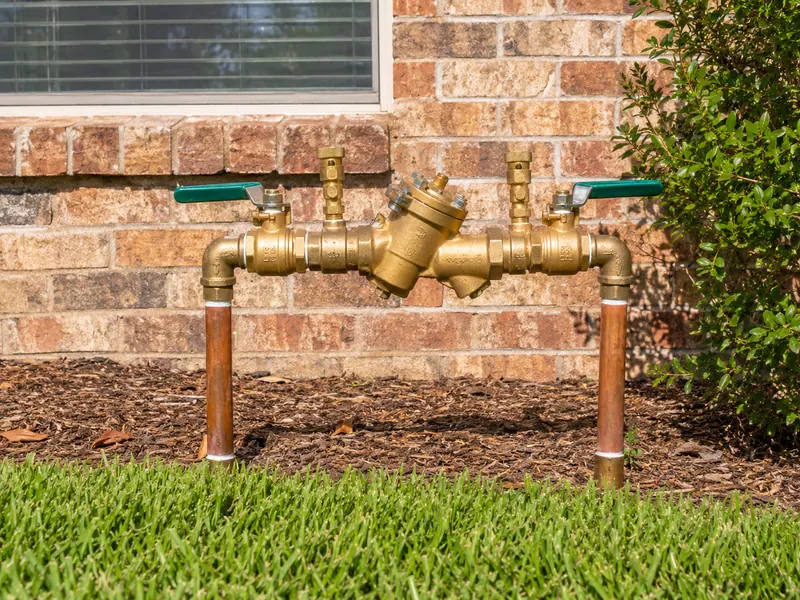
SAWS's Be Ready post of Dec. 1, 2024 puts it in two lines: turn irrigation systems off at the shutoff valve, and cover every in-ground valve box or fill the space with rags. After the 2021 storm, its sprinkler checkup post told owners where to look: the backflow preventer is usually in a rectangular box in the ground near the water meter, and turning one or both levers a quarter turn shuts it off.
Where is the shutoff?
Look near the SAWS meter for a rectangular in-ground box. The backflow preventer inside is the assembly the sprinkler line runs through, and its levers are quarter-turn valves. SAWS's one-minute freeze video adds that a backflow device mounted above ground should be insulated, and the same video tells owners to cover the in-ground boxes.
Lawn systems need one of three assembly types, depending on the hazard, under the plumbing code SAWS cites in its backflow FAQ: a pressure-type vacuum breaker (PVB), a double-check or an RP (reduced pressure principle) unit. Whichever type is installed, the shutdown step SAWS gave is the same lever turn.
What about draining the lines?
SAWS's pages give no step-by-step drain-down for a home sprinkler system before a freeze. This page therefore stops at what SAWS does say: valve off, boxes covered, above-ground device insulated. Opening test cocks or taking parts off an assembly is not a homeowner step.
Drought rules already limit how often a system runs. Stage 3, in force for SAWS customers as of Nov. 11, 2026, allows sprinklers once a week on the address's watering day, 5-10 a.m. and 9 p.m. to midnight. See the Stage 3 rules and the day for each address.
Who checks the backflow after a hard freeze?
A licensed tester. SAWS says each assembly must be tested and certified on installation and at least once a year by a licensed backflow tester, City Code requires the yearly test by a state-licensed tester, and a TCEQ license is required for anyone who tests or repairs one. A failed assembly must be repaired or replaced before it goes back into service. SAWS's annual testing page says the yearly report goes through BSI Online, the company SAWS contracts for notices and reports. The tester should be one registered for SAWS reports: SAWS's backflow program page points owners to BSI's customer page to find a registered testing company, and SAWS's FAQ says tester fees start at $40.
When pressure was returning after the February 2021 freeze, SAWS asked all customers to keep irrigation off until the system was back to normal. The annual rules are set out in backflow testing for sprinklers, and the rest of the house is handled in the pipe checklist.
Next to watch The yearly backflow test report is due to SAWS by June 30.
Key facts
- SAWS (Dec. 1, 2024): irrigation off at its shutoff valve; valve boxes covered or filled with rags
- Backflow preventer: usually a rectangular in-ground box near the meter; levers a quarter turn
- Lawn systems use a PVB, double-check or reduced pressure assembly (code cited by SAWS)
- Testing on installation and yearly by a state-licensed tester; TCEQ license to test or repair
- Annual report through BSI Online, due June 30
Sources
- SAWS — sprinkler checkup after the big freeze, March 2021 (checked Nov. 11, 2026)
- SAWS — irrigation and valve box steps, Dec. 1, 2024 (checked Nov. 11, 2026)
- SAWS — irrigation backflow questions and tester fees (checked Nov. 11, 2026)
- SAWS — yearly assembly testing and BSI reports (checked Nov. 11, 2026)
- TCEQ — who may test or repair an assembly (checked Nov. 11, 2026)
- SAWS — irrigation-off request as service returned, Feb. 2021 (checked Nov. 11, 2026)