Your yardY-08
Rain sensors and new irrigation plans
Filed Nov. 11, 2026 · checked against 5 sources · Aquifer to Tap
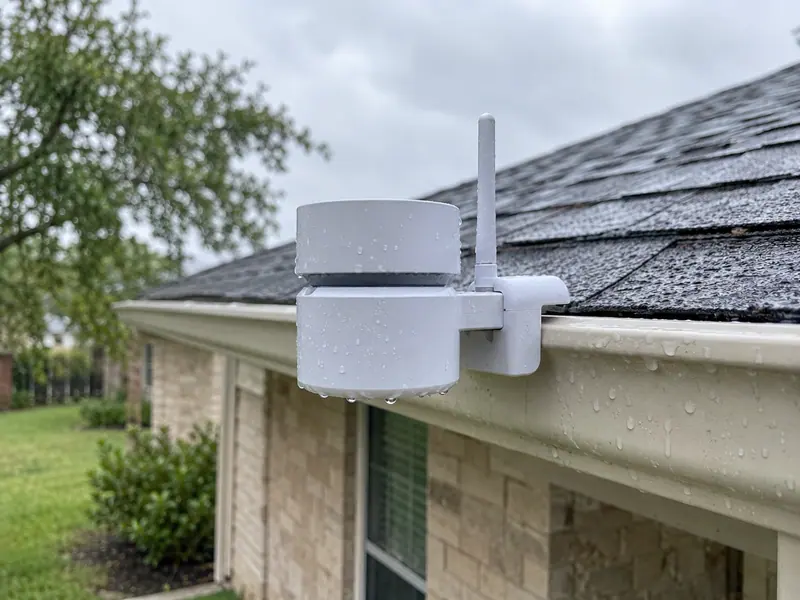
Rain sensors are required on all in-ground sprinkler systems in San Antonio, and since Jan. 1, 2025, every newly installed system in the SAWS service area needs an irrigation plan submitted to SAWS.
Jan. 1, 2026new systems also need a passed SAWS operational inspectionSource: San Antonio Water System
From Jan. 1, 2026, a new location must have an approved SAWS irrigation plan on file and pass an operational irrigation inspection before SAWS removes account holds or approves a landscape establishment variance. Design, installation and repair of irrigation systems in Texas require a TCEQ license. A home without a rain sensor gets one warning after a complaint before a violation.
Is a rain sensor required?
Yes. SAWS's rain sensor page states the requirement for all in-ground sprinkler systems in the city. The sensor shuts the controller off once enough rain has fallen, which keeps the system from violating the water waste rule against watering during or shortly after rain. A functioning rain sensor is also on the checklist for the new landscape variance.
Enforcement starts softly. A customer reported for having no sensor gets one warning before a violation is issued. After that, the non-compliance charges apply, starting at $137 for a home.
What does the SAWS plan review cover?
The Irrigation Plan Review Program requires a plan for every irrigation system installed in the SAWS service area from Jan. 1, 2025. SAWS says it responds within five business days. The plan review is separate from the irrigation permit issued by the City's Development Services Department, and commercial systems inside city limits or the extraterritorial jurisdiction still go to the City first.
From 2026 the program added a field check. SAWS's operational inspections look at the installed system and, from Jan. 1, 2026, at soil depth. City rules since 2006 require at least 4 inches of topsoil, with at least 6% organic material, under all new sod.
| Requirement | Applies to | Since |
|---|---|---|
| Rain sensor | All in-ground systems in San Antonio | No start date shown |
| Irrigation plan submitted to SAWS | Every newly installed system, SAWS service area | Jan. 1, 2025 |
| Approved plan plus passed operational inspection | New locations, to clear holds or variances | Jan. 1, 2026 |
| 4 inches of topsoil, 6% organic, under new sod | All new sod installations | 2006 ordinance; inspected from Jan. 1, 2026 |
| Annual Irrigation Checkup by a Licensed Irrigator | 5+ acres or over 1M gal irrigation a year | Due May 1 |
Who may install or repair a system?
Only licensed people. TCEQ's irrigator license page says a person may not sell, design, install, maintain, alter, repair, service or inspect an irrigation system in Texas, or consult on one, without a TCEQ license. Irrigation Technicians work under a Licensed Irrigator.
Large properties have one more duty. SAWS's Annual Irrigation Checkup applies to properties of 5 acres or more, or that used over 1 million gallons for irrigation the prior year. It is done by a Licensed Irrigator and due May 1; failing to comply costs $164 a year plus $0.8948 per 1,000 gallons of irrigation use, effective Jan. 1, 2026. Typical single-family lots fall outside it.
The backflow assembly on the same system has its own annual test, covered in the backflow report.
Key facts
- Rain sensors required on all in-ground sprinkler systems in San Antonio
- SAWS irrigation plan for every new system from Jan. 1, 2025
- From Jan. 1, 2026: approved plan plus passed operational inspection
- 4 inches of topsoil with 6% organic material under all new sod
- Irrigation work in Texas requires a TCEQ license
Sources
- SAWS — rain sensor requirement (checked Nov. 11, 2026)
- SAWS — plan review from 2025, inspections from 2026 (checked Nov. 11, 2026)
- TCEQ — irrigator, technician and inspector licenses (checked Nov. 11, 2026)
- SAWS — checkup for large irrigated properties (checked Nov. 11, 2026)
- SAWS — watering during or after rain listed as waste (checked Nov. 11, 2026)