Your pipesP-11
Septic systems in Bexar County
Filed Nov. 11, 2026 · checked against 5 sources · Aquifer to Tap
Septic systems in Bexar County are permitted by Bexar County itself, the TCEQ lists, except in Elmendorf, Hill Country Village, Shavano Park and Hollywood Park, which run their own programs.
3-5 yearsTCEQ's recommended interval for pumping a septic tankSource: TCEQ
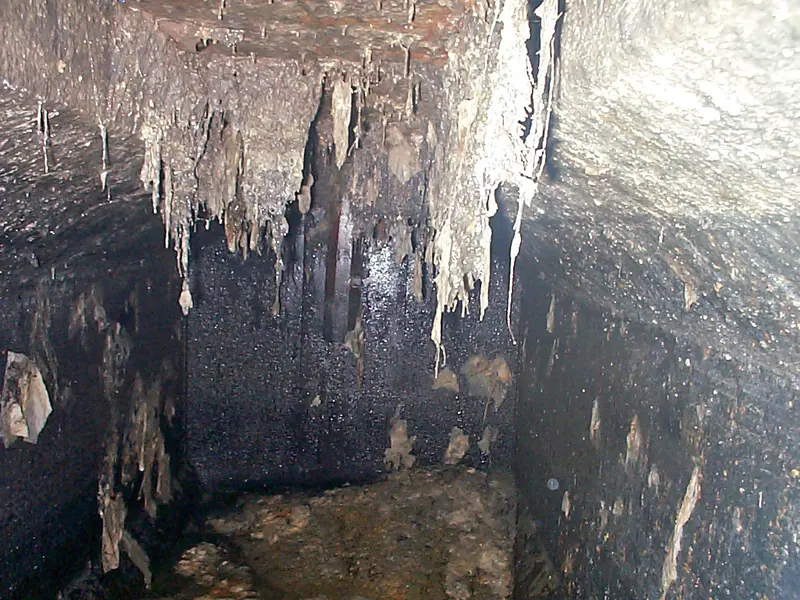
Texas calls a septic system an on-site sewage facility, or OSSF. TCEQ's authorized agent search names Bexar County as the permitting authority for the entire county except the cities of Elmendorf, Hill Country Village and Shavano Park and the Town of Hollywood Park. The San Antonio River Authority is not listed for Bexar. TCEQ itself is usually not the permitting office, but it sets the statewide minimums that local programs may tighten.
When is a permit needed?
A permit and an approved plan are needed to build, alter, repair, extend or operate an OSSF, according to TCEQ's permit page. The permitting authority must approve or deny an application within 30 days of receiving it. County fees and forms are not listed here; the Bexar County OSSF office has them.
Three situations fall outside the usual permit:
- Emergency repairs. Replacing tank lids or inlet and outlet devices, fixing risers, and repairing disinfection devices or drip tubing need no permit first, but must be reported in writing within 72 hours of starting (30 TAC 285.35).
- The 10-acre rule. A single-family home alone on a tract of 10 acres or more, with every part of the system at least 100 feet from the property line, a site evaluation, no nuisance and all effluent kept on the property, is exempt under state rules. A local authority can still require a permit.
- Grandfathered systems. A system installed before the local program was authorized or before Sept. 1, 1989, whichever is earlier, may keep running if it causes no nuisance, needs no repair and has not been altered or put to much heavier use.
How often should the tank be pumped?
TCEQ's general answer is every three to five years. Its owner advice page refines that by tank size and household, and says the work must be done by a TCEQ-registered sludge hauler.
| Tank size | 2 people (years) | 4 people (years) | 6 people (years) |
|---|---|---|---|
| 750 gallons | 4.2 | 1.8 | 1.0 |
| 1,000 gallons | 5.9 | 2.6 | 1.5 |
| 1,500 gallons | 9.1 | 4.2 | 2.6 |
The same page lists what not to do: no chemical additives or "enzymes," which TCEQ says may even harm the tank; no driveways, barns, storage buildings, sidewalks or patios over any part of the system; no parking or driving on it; and no trash down the toilet. It adds that a system more than 15 years old may need to be replaced. TCEQ also lists checking toilets for leaks among its do's; its dye test is in finding a leak with your meter.
Aerobic systems, wells and sewer
Aerobic treatment systems come with a maintenance contract and reports every four months; see aerobic septic: the four-month visits. Homes with a private well should know the EAA's guidance to keep septic leach fields or spray areas at least 150 feet from the well, explained in the Bexar County well rules.
SAWS runs no septic-to-sewer conversion program. Its Laterals to People help goes to SAWS water and sewer customers, which leaves out septic homes; the sewer side is in whose sewer blockage it is.
Key facts
- Bexar County permits OSSFs countywide except Elmendorf, Hill Country Village, Shavano Park and Hollywood Park.
- Permits are needed to build, alter, repair, extend or operate a system; decisions within 30 days.
- Emergency repairs must be reported in writing within 72 hours.
- TCEQ: pump every three to five years, by a registered sludge hauler.
- No additives, no building or parking over the system.
Sources
- TCEQ — OARS authorized agent search, Bexar County (checked Nov. 11, 2026)
- TCEQ — Getting a Permit for an OSSF (checked Nov. 11, 2026)
- TCEQ — OSSF general information (checked Nov. 11, 2026)
- TCEQ — Owner's do and don't list for an OSSF (checked Nov. 11, 2026)
- EAA — Well upkeep and setback guidance (checked Nov. 11, 2026)