Your waterW-03
Where SAWS water comes from
Filed Nov. 11, 2026 · checked against 7 sources · Aquifer to Tap
Where SAWS water comes from in 2025: about 47% of what customers used came from the Edwards Aquifer, SAWS says, with Vista Ridge, aquifer storage, desalination, Trinity wells and Canyon Lake supplying the rest.
~47%share of 2025 SAWS customer use from the Edwards AquiferSource: SAWS Edwards Aquifer page
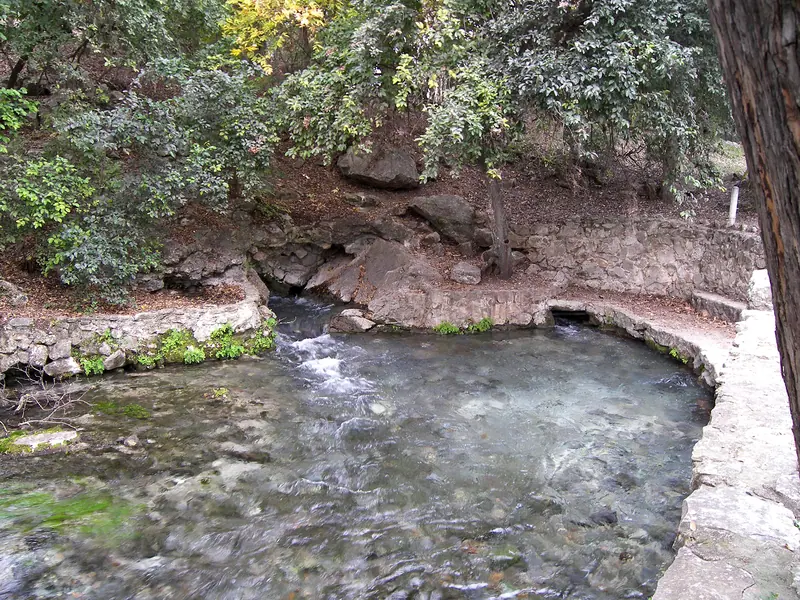
SAWS distributed 269,848 acre-feet of drinking water in 2025, according to its water supplies page. It also delivered 60,503 acre-feet of recycled water, most of it to CPS Energy. The same page says that in 1995 all of the city's water came from the Edwards, and that SAWS now runs 13 supply projects from seven sources.
The Edwards share is stated three ways on SAWS pages: "approximately 47%", "about half" and "over half". The 47% figure, about 154,000 acre-feet, appears to count recycled water in the total; SAWS's per-source table did not come through as text, so this page uses each source's own SAWS page.
How much came from each source in 2025?
| Source | 2025 amount | What it is |
|---|---|---|
| Edwards Aquifer | ~154,000 AF (~47%) | karst limestone aquifer under Bexar and nine other counties |
| Aquifer storage and recovery | over 27,000 AF recovered; ~1,600 AF stored | Edwards water banked in the Carrizo at H2Oaks |
| Brackish desalination | 5,700 AF | Lower Wilcox water treated by reverse osmosis |
| Surface water | just under 6,100 AF (under 2%) | Canyon Lake via GBRA Western Canyon |
| Trinity Aquifer | about 3,100 AF (under 1%) | wells in northern Bexar County |
| Vista Ridge | contract up to 50,000 AF a year | Burleson County wells, 142-mile pipeline |
Vista Ridge has been online since April 2020. SAWS says about 77% of its water comes from the Simsboro Aquifer and 23% from the Carrizo, though other SAWS pages say 70/30. The water is treated at the Agua Vista plant, about 48 million gallons a day, "to match Edwards Aquifer water quality."
The desalination plant at H2Oaks draws from about 1,500 feet down and can produce up to 11,200 acre-feet a year. Its reverse osmosis removes 99.9% of salts and minerals, SAWS says. The storage-and-recovery field at the same site opened in June 2004 and was the first major project paid for by the Water Supply Fee, explained under the Water Supply Fee and EAA fee.
Why the Edwards still matters most
SAWS calls itself about 98% groundwater. The Edwards is a karst aquifer roughly 180 miles long, and the EAA says its levels respond quickly to both rain and drought. SAWS aims to hold about 285,000 acre-feet a year of Edwards rights, and drought cutbacks on those rights run from 0 to 44%.
That is why the J-17 well reading drives the watering rules. As of Nov. 11, 2026, SAWS customers are in Stage 3 and the EAA has the San Antonio Pool in its own Stage 2; how those two stages differ is in a side-by-side report.
Not every source is treated alike. The 2026 Water Quality Report names the Edwards, Carrizo, Simsboro, Trinity and Wilcox aquifers and, in some areas, Canyon Lake. Fluoride is one example: Trinity water gets none added, as noted in fluoride in SAWS water.
Key facts
- 269,848 acre-feet of drinking water distributed in 2025
- Edwards: about 47% (~154,000 AF) of 2025 customer use, per SAWS
- 1995: 100% Edwards; 2025: seven sources, 13 projects
- Desalination 5,700 AF; Trinity about 3,100 AF; surface water under 2%
- Vista Ridge contract up to 50,000 AF a year, online since April 2020
Sources
- SAWS — Water Supplies, management and sources (checked Nov. 11, 2026)
- SAWS — Edwards Aquifer supply page (checked Nov. 11, 2026)
- SAWS — Vista Ridge Pipeline (checked Nov. 11, 2026)
- SAWS — Brackish Groundwater Desalination (checked Nov. 11, 2026)
- SAWS — Aquifer Storage and Recovery (checked Nov. 11, 2026)
- SAWS — Trinity Aquifer and Surface Water (checked Nov. 11, 2026)
- Edwards Aquifer Authority — About the Edwards Aquifer (checked Nov. 11, 2026)