Your waterW-11
Testing a private well
Filed Nov. 11, 2026 · checked against 6 sources · Aquifer to Tap
Testing a private well once a year for bacteria and nitrates or nitrites, through a certified lab, is what the Edwards Aquifer Authority recommends, plus any contaminant of local concern.
1 test a yearminimum for bacteria and nitrates in a private wellSource: Edwards Aquifer Authority
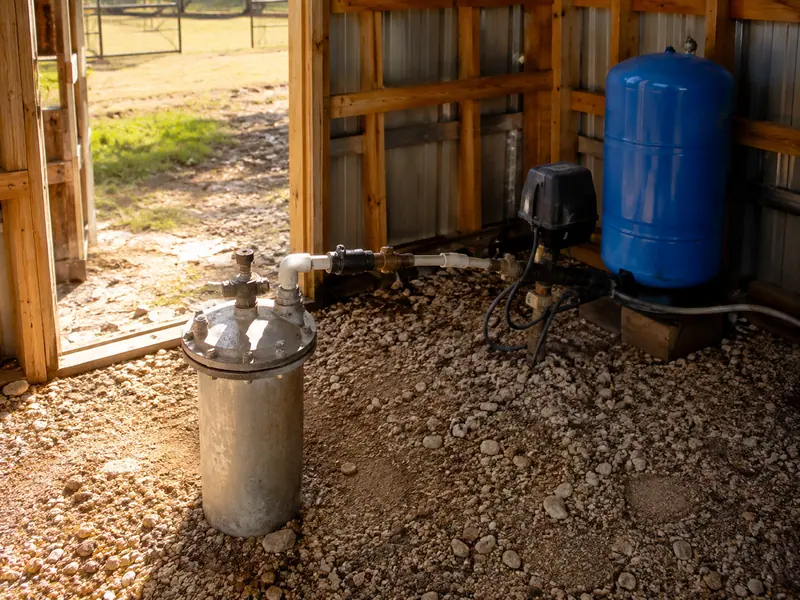
The EAA's well maintenance page lists the yearly test as "Annually for bacteria, nitrates and/or nitrites and any contaminants of local concern." The Trinity Glen Rose district puts the stakes plainly on its water quality page: "no federal, state, or local entity ensures the safety of private well water." Edwards wells still have to be registered with the EAA, as covered in private wells in Bexar County, but registration is not a water test.
When should a well be tested more often?
The EAA lists several triggers for testing beyond the yearly check:
| Trigger | Listed by |
|---|---|
| Change in taste, odor or appearance | EAA |
| Possible contamination sources introduced nearby | EAA |
| Recurring stomach illness in the household | EAA |
| An infant living in the home | EAA |
| Checking how treatment equipment performs | EAA |
| A positive total coliform result (retest for E. coli) | Texas A&M AgriLife |
Texas A&M AgriLife's coliform guide says anyone drinking from a private well should test at least once a year, and that after a positive total coliform result, the next step is a retest for fecal coliform or E. coli.
Taking a bacteria sample
The lab's own instructions come first. AgriLife's sampling guide, E-126, dated November 2001, sets out the general method: a sterile container from the lab; a cold-water faucet with the aerator removed, never a hose or a tap that runs through treatment; water run at full flow for five minutes; then a pencil-width stream into the bottle. The sample goes in the refrigerator and to the lab quickly, within six hours if possible and no more than 30. Lab fees in that guide are decades old and are not repeated here.
The EAA warns that water from recently repaired pumping equipment or a dirty tap can give false positives, and recommends disinfecting the system before testing. The Trinity district suggests keeping baseline results on file.
Shock chlorination and its limits
Shock chlorination is the disinfection step AgriLife describes for a well. Its ESC-059 (August 2019) says its method "is for private wells with a properly functioning submersible pump only," not jet pumps or damaged systems. The bleach amount comes from its Table 1, and the guide warns: "WARNING: Excessive chlorination can be harmful. Follow table 1 carefully." Chlorinated water stays in the plumbing at least 8 hours or overnight, and is flushed away from the septic system, plants and water bodies.
Wells near septic systems should follow the EAA's spacing guidance: keep 50 feet clear of chemicals and storage, and leach fields, pens and fuel at least 150 feet away. Septic upkeep is in septic in Bexar County, and old unused wells, a direct path for contamination, are in plugging and capping abandoned wells.
Key facts
- EAA: test yearly for bacteria and nitrates/nitrites through a certified lab
- Test more often after changes in taste or odor, illness, or with an infant at home
- AgriLife E-126: cold tap, aerator off, run five minutes, lab within 30 hours
- ESC-059 shock method: working submersible pumps only
- Lab test before drinking after shock chlorination
Sources
- Edwards Aquifer Authority — Well Maintenance and Inspection (checked Nov. 11, 2026)
- Trinity Glen Rose GCD — Water Quality Testing (checked Nov. 11, 2026)
- AgriLife and Texas Well Owner Network — coliform bacteria guide (checked Nov. 11, 2026)
- AgriLife Extension — E-126 bacteria sampling (checked Nov. 11, 2026)
- AgriLife Extension — ESC-059 shock chlorination (checked Nov. 11, 2026)
- CDC — cleaning and disinfecting with bleach (checked Nov. 11, 2026)